When I bought my camera I made a point of getting a longer lens for it. An 18-55mm lens came with the camera. For most things that lens serves very well. I bought a 75-300mm lens so I could get closer to subjects like animals and birds that will run away if you get too close to them physically with a shorter lens on the camera. This lens isn't ideal but it was within my budget and occasionally it does serve its purpose.
It did that today when a bunny came along to get the fallen seeds from the bird feeder on the crab apple tree out front. I quickly got my camera changed to the longer lens and took the following four pictures. I have to work hard to keep the camera steady with the lens fully extended and I think I'm getting the hang of it.
header picture
Find me on . . .
Monday, August 10, 2015
Monday, July 06, 2015
Down by the Canal Locks near the Ottawa River
I went to the Rideau Canal near the Chateau Laurier on Sunday, July 5, 2015 to photograph a memorial to John By and another for canal workers, to be posted on my blog, Memorials in Ottawa. While I was there I took some other pictures.
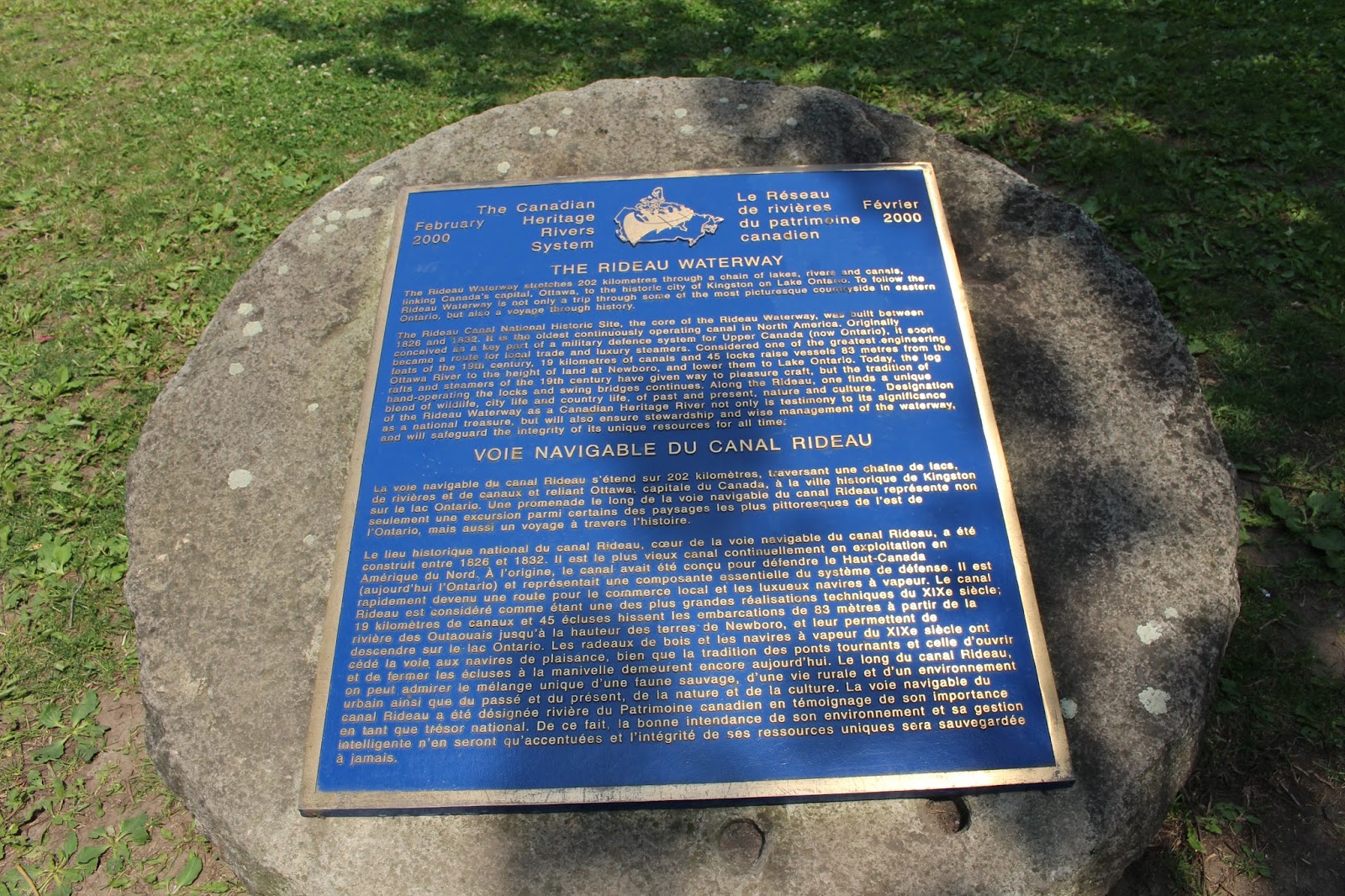
The Rideau Waterway stretches 202 kilometres through a chain of lakes, rivers and canals, inking Canada's capital, Ottawa, to the historic city of Kingston on Lake Ontario. To follow the Rideau Waterway is not only a trip through some of the most picturesque countryside in eastern Ontario, but also a voyage through history.
The Rideau Canal National Historical Site, the core of the Rideau Waterway, was built between 1826 and 1832. It is the oldest continuously operating canal in North America. Originally conceived as a key part of a military defence system for Upper Canada (now Ontario), it soon became a route for local trade and luxury steamers. Considered one of the greatest engineering feats of the 19th century, 19 kilometres of canals and 45 locks raise vessels 83 metres from the Ottawa River to the height of land at Newboro, and lower them to Lake Ontario. Today the log rafts and steamers of the 19th century have given way to pleasure craft, but the tradition of hand-operating the locks and swing bridges continues. Along the Rideau, one finds a unique blend of wildlife, city life and country life, of past and present, nature and culture. Designation of the Rideau Waterway as a Canadain Heritage River not only is testimony to its significance as a national treasure, but will also ensure stewardship and wise management of the waterway, and will safeguard the integrity of its unique resources for all time.
La voie navigable du canal Rideau s'étend sur 202 kilomètres, traversant une chaine de lacs, de rivières et de canaux et reliant Ottawa, capitale du Canada, à la ville historique de Kingston sur le lac Ontario. Une promenade le long de la voie navigable du canal Rideau représente non seulement une excursion parmi certains des paysages les plus pittoresques de l'est de l'Ontario, mais aussi un voyage à travers l'histoire.
Le lieu historique national du canal Rideau, cœur de la voie navigable du canal Rideau, a été construit entre 1826 et 1832. Il est le plus vieux canal continuellement en exploitation en Amérique du Nord. À l'orignie, le canal avait été conçu pour défendre le Haut-Canada (aujourd'hui l'Ontario) et représentait une composante essentielle du système de défense. Il est rapidement devenu une route pour le commerce local et les luxueux navires à vapeur. Le canal Rideau est considéré comme étant une des plus grandes réalisations techniques du XIXe siècle; 19 kilomètres de canaux et 45 écluses hissent les embarcations de 83 mètres à partir de la rivière des Outaouais jusqu'à la hauteur des terres de Newboro, et leur permettent de descendre sur la lac Ontario. Les radeaux de bois et les navires à vapeur du XIXe siècle ont cédé la voie aux navires de plaisance, bien que la tradition des ponts tournants et celle d'ouvrir et de fermer les éxcluses à la manivelle demeurent encore aujourd'hui. Le long du canal Rideau, on peut admirer le mélange unique d'une faune sauvage, d'une vie rurale et d'un environnement urbain ainsi que du passé et du présent, de la nature et de la culture. La voie navigable du canal Rideau a été désignée rivière du Patrimoine canadien en témoignage de son importance en tant que trésor national. De ce fait, la bonne intendance de son environnement et sa getstion intelligente n'en seront qu'accentuées et l'intégrité de ses ressources uniques sera sauvegardée à jamais.
THE RIDEAU WATERWAY
The Rideau Waterway stretches 202 kilometres through a chain of lakes, rivers and canals, inking Canada's capital, Ottawa, to the historic city of Kingston on Lake Ontario. To follow the Rideau Waterway is not only a trip through some of the most picturesque countryside in eastern Ontario, but also a voyage through history.
The Rideau Canal National Historical Site, the core of the Rideau Waterway, was built between 1826 and 1832. It is the oldest continuously operating canal in North America. Originally conceived as a key part of a military defence system for Upper Canada (now Ontario), it soon became a route for local trade and luxury steamers. Considered one of the greatest engineering feats of the 19th century, 19 kilometres of canals and 45 locks raise vessels 83 metres from the Ottawa River to the height of land at Newboro, and lower them to Lake Ontario. Today the log rafts and steamers of the 19th century have given way to pleasure craft, but the tradition of hand-operating the locks and swing bridges continues. Along the Rideau, one finds a unique blend of wildlife, city life and country life, of past and present, nature and culture. Designation of the Rideau Waterway as a Canadain Heritage River not only is testimony to its significance as a national treasure, but will also ensure stewardship and wise management of the waterway, and will safeguard the integrity of its unique resources for all time.
VOIE NAVIGABLE DU CANAL RIDEAU
La voie navigable du canal Rideau s'étend sur 202 kilomètres, traversant une chaine de lacs, de rivières et de canaux et reliant Ottawa, capitale du Canada, à la ville historique de Kingston sur le lac Ontario. Une promenade le long de la voie navigable du canal Rideau représente non seulement une excursion parmi certains des paysages les plus pittoresques de l'est de l'Ontario, mais aussi un voyage à travers l'histoire.
Le lieu historique national du canal Rideau, cœur de la voie navigable du canal Rideau, a été construit entre 1826 et 1832. Il est le plus vieux canal continuellement en exploitation en Amérique du Nord. À l'orignie, le canal avait été conçu pour défendre le Haut-Canada (aujourd'hui l'Ontario) et représentait une composante essentielle du système de défense. Il est rapidement devenu une route pour le commerce local et les luxueux navires à vapeur. Le canal Rideau est considéré comme étant une des plus grandes réalisations techniques du XIXe siècle; 19 kilomètres de canaux et 45 écluses hissent les embarcations de 83 mètres à partir de la rivière des Outaouais jusqu'à la hauteur des terres de Newboro, et leur permettent de descendre sur la lac Ontario. Les radeaux de bois et les navires à vapeur du XIXe siècle ont cédé la voie aux navires de plaisance, bien que la tradition des ponts tournants et celle d'ouvrir et de fermer les éxcluses à la manivelle demeurent encore aujourd'hui. Le long du canal Rideau, on peut admirer le mélange unique d'une faune sauvage, d'une vie rurale et d'un environnement urbain ainsi que du passé et du présent, de la nature et de la culture. La voie navigable du canal Rideau a été désignée rivière du Patrimoine canadien en témoignage de son importance en tant que trésor national. De ce fait, la bonne intendance de son environnement et sa getstion intelligente n'en seront qu'accentuées et l'intégrité de ses ressources uniques sera sauvegardée à jamais.
Royal Canadian Mounted Police Guard Tomb of the Unknown Soldier
I was in the Parliamentary Precinct on Sunday, July 5, 2015. I made a point of going to the National War Memorial to photograph the Royal Canadian Mounted Police guarding the Tomb of the Unknown Soldier. Although tourists crowded the memorial I managed to photograph it without getting any of them in my pictures.
Friday, July 03, 2015
Site of the National Holocaust Monument
The National Holocaust Monument in Ottawa will be very close to where the Canadian Firefighters Memorial is located. When I visited the Firefighters Memorial recently (May 31, 2015) I went across the street to photograph the state of the site for the Holocaust Monument.
Not much to see at the site at the moment, just bedrock and some accumulated ground water. I should be visiting the area again soon. If I see anything in the way of further development I'll have some more photographs to show.
| I took this photograph to show the size of the monument's footprint. You can see a chain link fence surrounding the site. The War Museum can be seen partially on the right. |
Not much to see at the site at the moment, just bedrock and some accumulated ground water. I should be visiting the area again soon. If I see anything in the way of further development I'll have some more photographs to show.
Thursday, July 02, 2015
The Greely Canada Day Festival 2015 Bouncy Castle
As I said in a previous post, I didn't take in much of the 2015 Greely Canada Day Festival. I did photograph the 2015 bouncy castle. To me, this one is a beauty. Here are the pictures I took. You can just imagine how it works and how much fun you could have on it.
BT93
Greely had its annual Canada Day Festival. I didn't participate much this year. I had a gig earlier in the day, playing rhythm guitar in a jazz band at a retirement home. We played to sixty people. Five people stopped me on my way out of the place to tell me how much they enjoyed the music. So that's nice.
I did go over to check out the Greely Canada Day Festival, but things were just getting underway and I had an invite to go somewhere else so I didn't get to see much of the celebration. I did get to photograph the Greely Fire Station 93 fire truck, BT93. The letters tell what kind of apparatus this is and the number is the station number. For example T35 would be a tower at station 35. P47 would be a pumper at station 47. I have no idea what BT stands for. I looked it up on line and found references to the vehicle but no explanation as to the type of apparatus.
Saturday, May 16, 2015
Ottawa Fire Station 46 in Kanata
Fire Station 46 occupies a place on the west side of Iber Road South of Hazeldean Road. Michael Kinghorn's sculpture, Overhaul, has a place of prominence at the front of the station.
La caserne de pompiers n° 46 se situe à l'ouest d'Iber Road, au sud de Hazeldean Road. La sculpture « Overhaul » de Michael Kinghorn occupe une place de choix devant la caserne.
Subscribe to:
Posts (Atom)